Prambanan Temple: The Majestic Legacy of Hindu Java
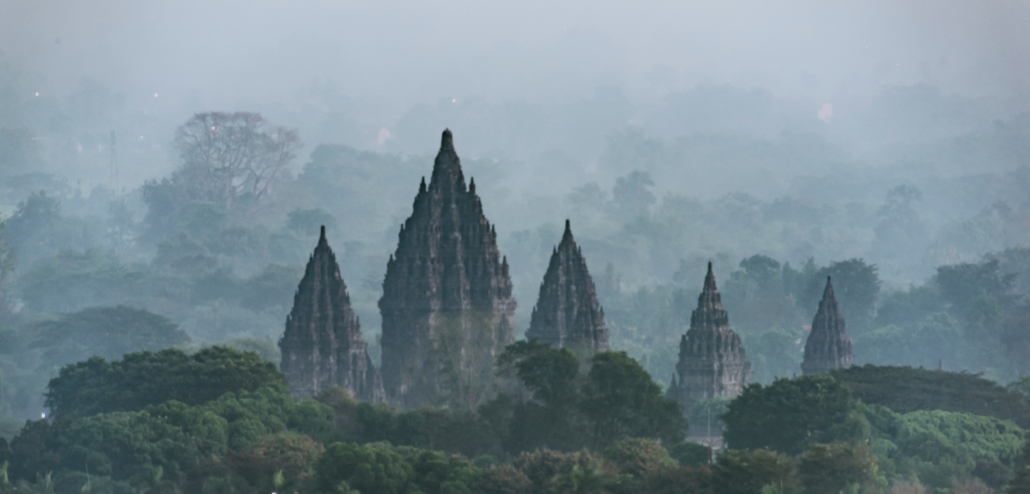
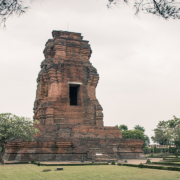
Rising elegantly from the plains of Central Java, Prambanan Temple is a towering testament to the spiritual and artistic heights achieved by ancient Javanese civilization. Built in the 9th century and dedicated to the Hindu Trimurti—Brahma the Creator, Vishnu the Preserver, and Shiva the Destroyer—Prambanan is the largest Hindu temple complex in Indonesia and a UNESCO World Heritage Site. It stands not only as an architectural marvel, but also as a sacred monument encoding cosmic philosophy, divine myths, and the enduring legacy of Hinduism in the Indonesian archipelago.
Historical Context
Prambanan was constructed around 850 AD, likely by King Rakai Pikatan of the Mataram Kingdom, as a symbol of the kingdom’s return to Hindu rule after a period of Buddhist dominance under the Sailendra Dynasty (which built Borobudur). The temple complex was strategically positioned to rival Borobudur in spiritual and political significance. It symbolized the return of Sanatana Dharma (Hindu order) and the divine authority of Java’s monarchs as earthly representatives of the gods.
Despite its grandeur, Prambanan fell into disuse after a series of volcanic eruptions and political shifts. By the 16th century, it was largely abandoned and crumbled into ruins—until restoration began in the early 20th century, and continues to this day.
Architectural Grandeur
The layout of Prambanan reflects Hindu cosmology and mandala structure. It consists of three concentric zones:
- Bhurloka (Outer Zone) – the human realm
- Bhuvarloka (Middle Zone) – the realm of holy beings
- Svarloka (Inner Zone) – the realm of the gods
At the heart of the Svarloka zone lie the three main temples:
- Shiva Mahadeva Temple (47 m high): The central and tallest structure, devoted to Shiva, the destroyer and regenerator. Inside stands a magnificent 3-meter statue of Shiva, and accompanying chambers contain deities associated with him—Durga (his consort), Agastya (his teacher), and Ganesha (his son).
- Vishnu Temple: Located to the north of Shiva, this temple enshrines a statue of Vishnu holding the chakra and conch.
- Brahma Temple: To the south of Shiva, this temple contains a statue of Brahma with four heads, each facing a cardinal direction.
Opposite each of these shrines stands a smaller vahana temple, housing the sacred animal mount of each deity:
- Nandi (bull) for Shiva
- Garuda (eagle) for Vishnu
- Hamsa (swan) for Brahma
The complex once included over 240 temples, though many remain in ruin or partial restoration.
Reliefs and Sacred Storytelling
The inner walls of the main temples are adorned with bas-reliefs narrating epic Hindu scriptures:
- Ramayana Reliefs: The inner balustrades of the Shiva and Brahma temples depict scenes from the Ramayana, India’s epic of virtue, love, and war. Visitors can follow the story clockwise, beginning at the Shiva temple, witnessing Rama’s exile, Sita’s abduction, Hanuman’s mission, and the great war against Ravana.
- Krishna Reliefs: The Vishnu temple features reliefs from the Bhagavata Purana, especially Krishna’s childhood exploits and cosmic battles.
These carvings are not only devotional art but act as spiritual instruction, passing on dharmic values, divine archetypes, and cosmological teachings.
Symbolism and Sacred Geometry
Prambanan is encoded with sacred numbers and proportions based on Vastu Shastra and Hindu temple science:
- The layout of 3 main shrines and 3 vahana shrines mirrors the divine triad of creation, preservation, and dissolution.
- The temple’s towering spires represent Mount Meru, the cosmic mountain at the center of the universe.
- Its ascending tiered rooflines symbolize the soul’s journey from the earthly realm to spiritual liberation.
Legends and Local Myth
One of Java’s most famous legends, the tale of Roro Jonggrang, is deeply entwined with Prambanan’s origin:
Roro Jonggrang, a beautiful princess, rejected the advances of the powerful prince Bandung Bondowoso. When forced to marry him, she imposed a condition: he must build 1,000 temples in a single night. Bandung summoned spirits to help and nearly completed the task, but Roro Jonggrang tricked them into fleeing before the last temple was done. Furious at her deception, Bandung cursed her to become the 1,000th statue—a figure still believed to be the statue of Durga in Shiva’s temple.
This story adds a layer of mysticism and emotional resonance to the temple, reflecting Javanese fusion of spiritual devotion and mythic romance.
Modern Experience and Pilgrimage
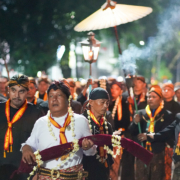
Today, Prambanan is more than a historical site—it is an active sacred space and major pilgrimage destination, especially during Hindu festivals like Nyepi and Galungan. Visitors from across the globe come to:
- Explore its architecture and spiritual resonance
- Watch the open-air Ramayana Ballet, performed with traditional Javanese dance and gamelan music against the backdrop of the illuminated temple
- Meditate in the quiet early morning hours or under the stars during full-moon rituals
Visitor Information
- Location: Klaten Regency, Central Java (approx. 17 km from Yogyakarta)
- Opening Hours: Daily, 6:30 AM – 5:00 PM
- Tips:
- Visit at sunrise or sunset for the most breathtaking views.
- Hire a knowledgeable guide to uncover deeper layers of meaning in the reliefs.
- Modest attire is recommended to honor the sanctity of the space.
Prambanan Temple is not just a relic of a glorious past—it is a living temple, radiating the divine essence of Java’s Hindu legacy. It speaks in stone of cosmic truths, celestial order, and the eternal dance of gods and humans. For spiritual seekers, lovers of myth, and admirers of ancient architecture, Prambanan is not merely a site to visit—it is an initiation into the heart of sacred Java.